

International News
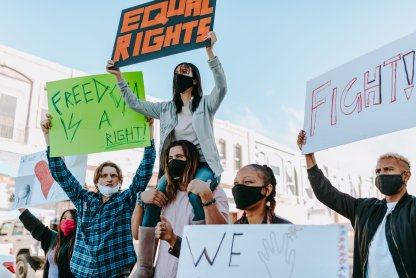
Anti-Fascist Marches in Germany Target RIiht Wing Conference
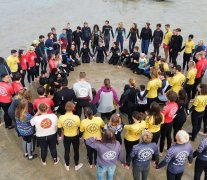
On Saturday, tens of thousands of anti-fascist demonstrators from across Germany converged on the city of Erfurt to...
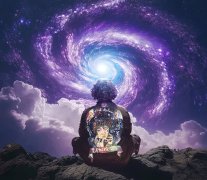
Top newswire LGBTQ Nation reports that for some African-American Queer people, the traditional religious beliefs of the Yoruba people is appealing as Christian fundamentalism crashes the US into authoritarianism.
A significant portion of the American population now identifies with Christian nationalism, with recent figures showing around one-third of US citizens are either "Adherents" or "Sympathisers" of the movement. This includes 67% of white evangelical Protestants. For many Black queer individuals, this prevailing climate has intensified a quest for spiritual traditions that do not inherently label queerness as sinful.
This search has guided some towards Yoruba religion, a set of spiritual and cultural practices originating from modern-day Nigeria and West Africa. These traditions predate Christianity, Islam, and European colonisation on the continent. Yoruba spirituality centres on cultivating Iwa Pele, or good character, to live in harmony with the divine and align with one's destiny and spiritual equilibrium. This is achieved through devotion to the Orishas (divine spirits), honouring ancestors, performing rituals, and following ethical teachings.
Yoruba also provides its followers with a spiritual lineage and a sense of racial and cultural identity that many feel is absent from mainstream US religions. Places of worship and community gathering spaces can be found in private homes, as well as in shops in New York City that sell statues, sacred ceramic pots, beads, and the oils and herbs used in offerings to the Orishas.
A central element of Yoruba practice is Ifá, a divination system linked to Orunmila, the Orisha of wisdom and destiny. Through Ifá, priests interpret the Odu Ifá, a collection of 256 volumes of poetic verses that preserve history, cosmology, and philosophy. Unlike religions that focus on sin and eternal punishment, Yoruba emphasises consequences and alignment in the present life. Its practices include prayer, offerings, altars, music, and ritual. Death is primarily viewed as joining one's ancestors rather than facing a final judgment. There is no single, strict rule regarding LGBTQ+ identity, as teachings vary by tradition; the focus is more on balance and lived character than on fixed sexual categories.
Worldwide, an estimated 75 to 100 million people practise some version of Yoruba, including Ifá, Santería, and related Orisha traditions across Africa and the diaspora. In the United States, the practice saw a resurgence during the Black liberation movement of the 1960s and 1970s. In Sheldon, South Carolina, the Oyotunji African Village stands as a 27-acre intentional community dedicated to preserving Yoruba-African culture, traditions, and spirituality on American soil.
Yoruba spirituality stands in stark opposition to Christian nationalism, a movement that relies heavily on dividing people into rigid moral categories of acceptable and unacceptable, citizen and outsider, righteous and fallen, pure and corrupt. Within Christian nationalist rhetoric, the existence of openly queer people is often presented as evidence that society has strayed from divine order.
Yoruba approaches existence from a fundamentally different perspective. Instead of centring spiritual life around sin, punishment, and moral condemnation, its traditions historically emphasise balance and nature. Spiritual life is measured not by self-repression but by alignment, accountability, wisdom, and participation in communal life.
This difference carries both spiritual and political weight. Christian nationalism is not solely a religious movement; it represents an effort to merge conservative Christianity with state power and national identity, positioning Christianity as the defining authority over public morality, education, law, gender roles, and cultural legitimacy. The movement frequently portrays feminism, religious pluralism, reproductive freedom, and LGBTQ+ visibility as threats to the nation's moral stability. Under Christian nationalism, Christianity is no longer one faith among many but becomes the presumed foundation of American identity itself.
A 2024 survey found that 55% of Americans believe Christian nationalism has had a "mostly negative" impact on the country. This view is shared by majorities of Black Americans, Hispanic Americans, Asian Americans, religious minorities, and younger Americans, reflecting growing public concern over the movement's influence on democracy, education, and civil rights.
For queer Black Americans raised within traditions shaped by these beliefs, Christian nationalist spirituality can become inseparable from fear, surveillance, shame, and the constant pressure to minimise oneself to remain acceptable to family, church, or community. Turning toward Yoruba spirituality can thus represent an explicit rejection of the idea that conservative Christianity should govern every aspect of social life.
This rejection also carries historical significance. Christianity's relationship with Black communities cannot be separated from the histories of slavery, colonialism, and forced conversion. European missionaries and colonial governments frequently portrayed African spiritual traditions as primitive, demonic, irrational, or uncivilised, while presenting Christianity as synonymous with morality and civilisation itself.

There has been more bad news for the rich and powerful owners of the GB News Channel, a rogue network in the UK which, unlike other broadcasters, makes little attempt at rational discourse and instead winds its viewers up about the supposed threats...
On Saturday, tens of thousands of anti-fascist demonstrators from across Germany converged on the city of Erfurt to...
The Peter Tatchell Human Rights Fund, together with other LGBTQIA human rights groups, is planning on protesting at the...