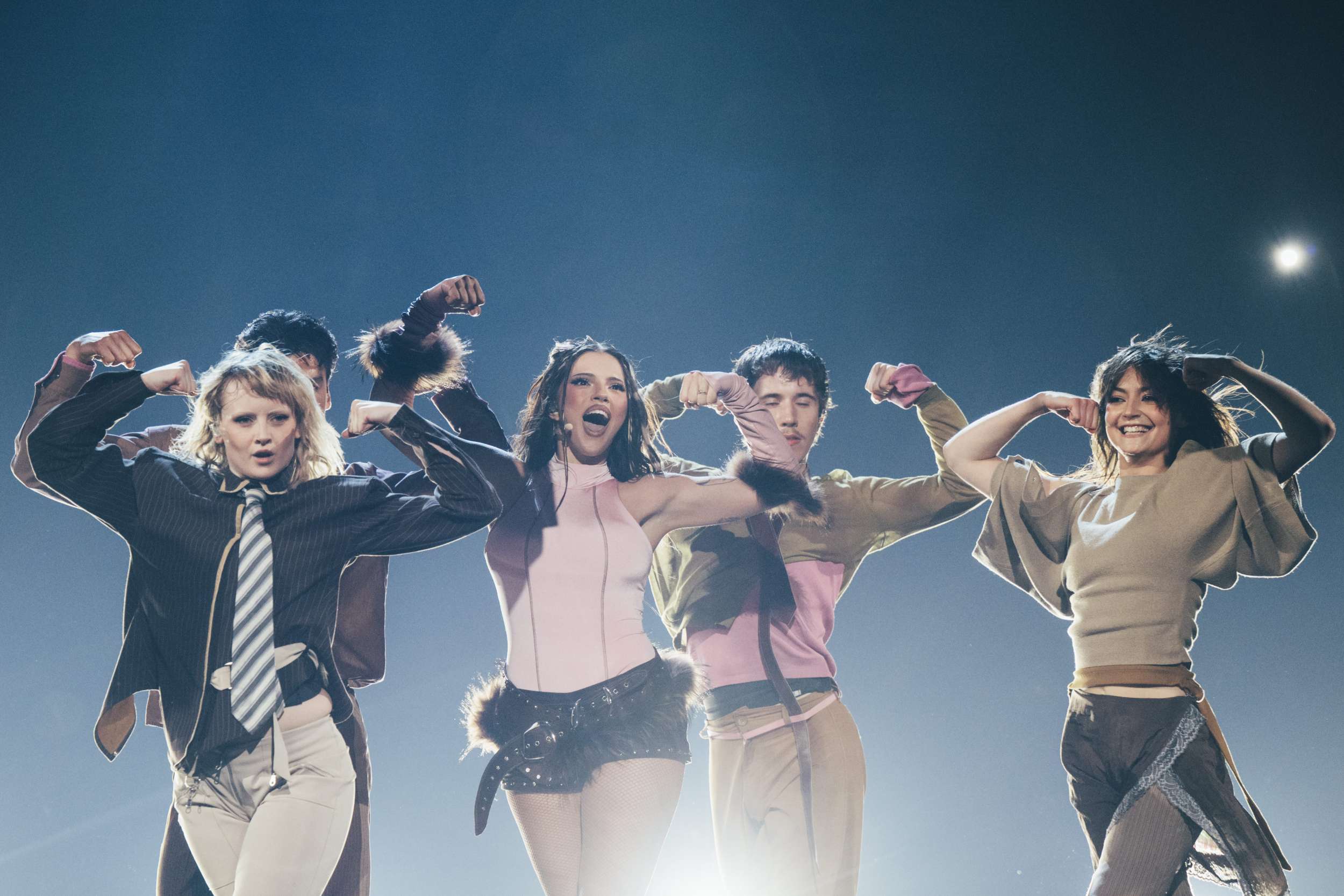
Bulgaria has been crowned the winner of the 70th Eurovision Song Contest, with Darina Nikolaeva Yotova — known simply as Dara — taking the trophy with her infectious pop banger Bangaranga.
The grand final, held at the Wiener Stadthalle in Vienna and hosted by Austrian stars Victoria Swarovski and Michael Ostrowski, went right down to the wire. Bulgaria ultimately triumphed with a commanding 516 points (204 from the juries, 312 from the public televote), holding off a strong challenge from Israel who finished second with 343 points.
It marks Bulgaria's first ever Eurovision win. "Nobody saw it coming," said BBC Music Correspondent Mark Savage from the press centre in Vienna. "Dara wasn't considered to be in the running. But the quirky choreography and naggingly catchy chorus turned her into a winner."
The winner — Dara, "Bangaranga"
Dara, 27, performed her high-energy pop track produced by Monoir and co-written with Dimitris Kontopoulos, Anne Judith Wik and Yotova herself. The song's infectious energy and memorable choreography made it a stand-out moment of the night. As the final points were announced, confetti rained down across the Wiener Stadthalle as Bulgaria celebrated its first-ever victory.
The win means Bulgaria will host the 2027 Eurovision Song Contest — a first for the country.
The scores
The jury vote put Bulgaria firmly in the lead with 204 points, ahead of joint-second Australia and Denmark on 165, France on 144 and Finland on 141. The UK found itself languishing at the bottom with just a single jury point from Ukraine.
But as always at Eurovision, the public vote turned everything upside down.
As the televote scores were read out, the leader board was shuffled like a pack of cards. Romania shot to the top with a massive public vote surge. Moldova drastically increased its score. And when Israel received 220 points from the public televote, the country took the overall lead with 343 — prompting a very mixed reaction in the arena, with some fans making their feelings on Israel's participation abundantly clear.
But Bulgaria's 312 public points proved enough to seal the deal. Here's how the final standings looked:
🥇 Bulgaria — Dara — Bangaranga — 516 points
🥈 Israel — Noam Bettan — Michelle — 343 points
🥉 Italy — Sal Da Vinci — Per Sempre — 281 points
4th Romania — Alexandra Căpitănescu — Choke Me — 296 points
5th Australia — Delta Goodrem — 287 points
6th Finland — 279 points
7th Ukraine
8th Moldova
9th France — Monroe — 158 points
10th Denmark
Finland, who had been the bookmakers' favourites to win all year, had to settle for sixth place.
How did the UK do?
It was another difficult night for the United Kingdom. Sam Battle — aka Look Mum No Computer — performed his lively techno track Eins, Zwei, Drei while dancing energetically with performers dressed as computers. But the reception was brutal.
The UK finished in last place with just 1 point — a solitary jury point from Ukraine. The public vote delivered nul points for Sam's own entry, matching the UK's worst result since James Newman's zero-point total in 2021.
However, the UK public were still voting — and their televote points went elsewhere. The UK audience gave their 10 points to Israel, contributing to the country's massive 220-point televote surge that briefly put them in the winning position. Belgium received 8 from the UK public, with the remaining top marks distributed across other countries. The UK's jury vote meanwhile had already given their top marks to France (12) and Bulgaria (10).
Sam took it in good spirits, laughing it off and waving his flag at the camera. "Look mum, no points!" he'd joked about in the lead-up, and the T-shirt stayed on.
How the UK jury voted (announced by La Voix):
· 12 points — France
· 10 points — Bulgaria
· 8 points — Czechia
· 7 points — Ukraine
· 6 points — Denmark
· 5 points — Poland
· 4 points — Norway
· 3 points — Australia
· 2 points — Finland
· 1 point — Malta
Drag queen and Strictly Come Dancing star La Voix served as the UK's first ever Eurovision "spokesqueen," delivering the jury results live from the BBC's Salford studios. Sashaying in from what she described as "a cleaner's cupboard with a green screen behind me," she was a highlight of the night for British viewers.
BBC commentator Graham Norton didn't miss a beat, joking that no-one could take the UK's one point away from us.
Controversy, boycotts, and protests
This year's contest was the most politically charged in Eurovision history. Five countries boycotted the event entirely over Israel's participation amid the ongoing war in Gaza: Iceland, Ireland, the Netherlands, Slovenia and Spain.
Spain's boycott was particularly significant as the country is normally an automatic finalist as part of the "Big Five" — a group of the largest financial contributors. With Spain out, the group was reduced to the Big Four: the UK, France, Germany and Italy. This marks the lowest number of participating countries since the introduction of semi-finals in 2004.
Iceland and the Netherlands chose to still broadcast the contest despite their withdrawal.
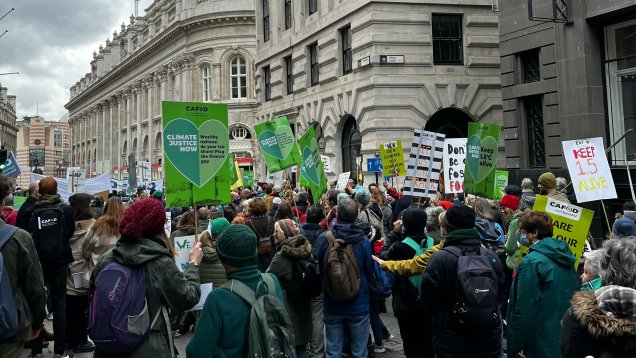
The boycotts sparked the largest Eurovision protests since 1970, according to reports. Thousands gathered in Vienna throughout the week to demonstrate against Israel's participation.
Despite the controversy, Israeli entrant Noam Bettan, 28, performed his song Michelle third in the running order. While many expected him to be drowned out by booing, the reaction inside the arena was surprisingly positive, with crowds cheering and waving Israeli flags.
The televote surge that almost won it
Coming into the public vote, Israel trailed Bulgaria with just 123 jury points — well behind the leaders. But then the televote numbers came in, and the scoreboard flipped.
Israel received a massive 220 points from the public vote — the highest televote score of any country on the night. That surge catapulted them from mid-table all the way to the top of the leaderboard with 343 points, briefly putting them in the winning position.
It was a deeply polarising moment inside the arena. While Israeli flags waved from the audience, there were also audible boos and clear disapproval from other sections of the crowd as the scale of the televote support became clear. The mixed reaction reflected the wider divisions that have surrounded Israel's participation all year.
Ultimately, Bulgaria's own huge televote haul of 312 points was enough to hold them off — but for those few minutes, it looked like Israel might just pull it off.
Will Israel be back in 2027?
The controversy has raised serious questions about whether Israel will be allowed to return in 2027, with ongoing pressure on the EBU over its refusal to ban the country — despite having banned Russia in 2022 following the invasion of Ukraine. The EBU maintains it is apolitical, though critics have pointed to sponsorship ties, including Israeli beauty brand Moroccanoil, which has been a prominent Eurovision sponsor since 2020.
For now, Israel's second-place finish — and the scale of its public support — adds another layer to the ongoing debate about the contest's relationship with the country.
What's next?
Bulgaria's victory means the 2027 Eurovision Song Contest will head to Bulgaria for the first time. After the most controversial and chaotic edition in the contest's 70-year history — marked by boycotts, protests, technical disasters and an unpredictable winner — the focus now turns to whether the EBU can navigate the divisions that have deepened dramatically.
For now though, the music plays on. Dara's Bangaranga will be stuck in heads across the continent for weeks to come. And Bulgaria — that most unlikely of winners — has its moment in the Eurovision sun.