

International News
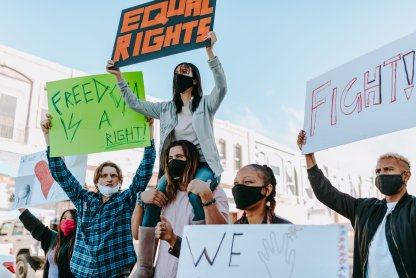
Anti-Fascist Marches in Germany Target RIiht Wing Conference
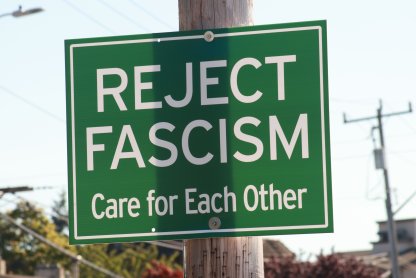
On Saturday, tens of thousands of anti-fascist demonstrators from across Germany converged on the city of Erfurt to...
Barney Frank, the former Democratic congressman from Massachusetts who became one of the most influential figures in the fight for LGBTQ+ equality during his three decades in the House of Representatives, has died at the age of 86. He passed away on Tuesday evening, surrounded by family, after spending several months in hospice care near his home in Ogunquit, Maine, where he was being treated for congestive heart failure.
He leaves behind his husband, Jim Ready. His sister, Doris Breay, paid tribute to him, telling NBC 10 Boston: "He was, above all else, a wonderful brother. I was lucky to be his sister."
Frank made history as the first member of Congress to come out voluntarily and, in 2012, became the first gay US representative to marry while still in office. His 32-year career in the House was marked by significant legislative achievements that reshaped protections for the LGBTQ+ community.
Among his key contributions, Frank co-sponsored the 2007 Partnership Benefits and Obligations Act, which sought to extend benefits to the domestic partners of federal employees. He played a central role in drafting the 1990 Immigration Act, removing language that had previously excluded immigrants based on "sexual deviance." He was also a primary architect of the 2009 Matthew Shepard and James Byrd Jr. Hate Crimes Prevention Act, which expanded federal hate crime laws to cover offences motivated by a victim's actual or perceived sexual orientation, gender identity, or disability.
Even after retiring from Congress in 2012, Frank remained engaged with the legislative process. His final appearance on the House floor came in 2022, when he returned to witness the passage of the Respect for Marriage Act.
Frank’s commitment to civil rights began long before his congressional career. In 1964, at the height of the Civil Rights Movement, he volunteered in Mississippi during Freedom Summer. He entered politics as a staffer for Boston’s mayor and a Massachusetts congressman before serving three terms in the state legislature. In 1980, he was elected to the US House of Representatives.
While a state representative, Frank introduced a bill that would have legalised sex work in Massachusetts, reflecting his focus on crime in his district. Later, during his time in Congress, he faced personal scrutiny when a prostitution ring was discovered operating from his own home.
Known for his sharp wit and direct manner, Frank was a pragmatist who balanced idealistic goals with a keen understanding of political realities. Coming out when he did, many believe, ultimately saved his political career.
During the 2006 election campaign, Republican congressman John Hostettler warned his constituents that Frank and then-Minority Leader Nancy Pelosi would pursue a "radical homosexual agenda." Frank later responded with characteristic humour, listing his priorities as "the right to marry the individual of our choice; the right to serve in the military to defend our country; and the right to a job based solely on our own qualifications." He added: "I acknowledge that this is an agenda, but I do not think that any self-respecting radical in history would have considered advocating people’s rights to get married, join the army, and earn a living as a terribly inspiring revolutionary platform."
However, Frank’s pragmatic approach sometimes put him at odds with the broader LGBTQ+ community. In 2007, he removed language protecting transgender people from his Employment Non-Discrimination bill, arguing that the House did not have sufficient support to include such protections. He promised to introduce a separate bill later, but LGBTQ+ rights groups were not appeased. Frank later acknowledged that the decision was driven by a lack of votes, not a lack of commitment to transgender equality.
Frank founded the National Stonewall Democrats in 1998, cementing his role as a key insider in the national LGBTQ+ rights movement. Despite occasional frustrations on both sides, his legacy as a trailblazer for equality remains firmly established.

There has been more bad news for the rich and powerful owners of the GB News Channel, a rogue network in the UK which, unlike other broadcasters, makes little attempt at rational discourse and instead winds its viewers up about the supposed threats...
On Saturday, tens of thousands of anti-fascist demonstrators from across Germany converged on the city of Erfurt to...
The Peter Tatchell Human Rights Fund, together with other LGBTQIA human rights groups, is planning on protesting at the...