

Local
Somerset Website Fights Back Against Homophobic, Transphobic, Internet Trolls
Just as with the Bristol Post newspaper earlier this year, so the Somerset Live website has this week hit back at...
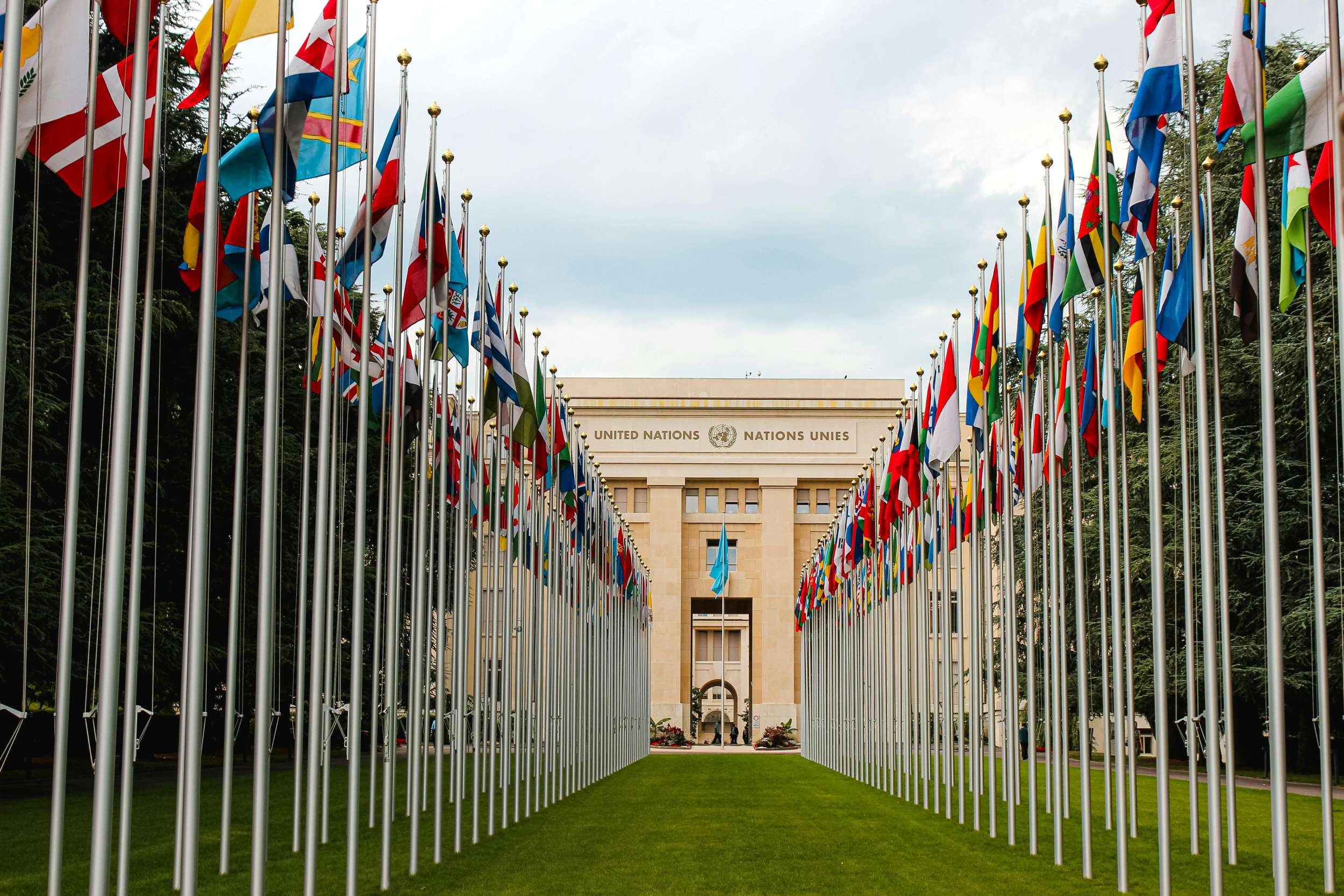
Following a recent High Court ruling in England and Wales, a group of United Nations independent experts has urged the UK Government to maintain a careful and measured approach when developing policy guidance on access to single-sex spaces. The statement comes after the court provided clarification on the obligations of employers and service-providers under the 2010 Equality Act.
The UN experts used the opportunity to recall the UK's international human rights obligations. They emphasised the necessity of ensuring equal protection for all individuals, explicitly naming all transgender people and all women and girls, including transgender women. The statement underscores the need for policies that safeguard the rights of all these groups without discrimination.
The High Court's judgement is seen as a significant interpretation of the complex interplay between protections against sex discrimination and gender reassignment discrimination within the Equality Act. This legal clarity is now a focal point for discussions on how single-sex services, such as changing rooms or domestic violence shelters, can be operated lawfully and inclusively.
By advocating for a "measured approach," the UN experts are encouraging policymakers to proceed with caution, ensuring any future guidance fully considers the legally protected rights of all concerned. The call highlights the ongoing international scrutiny of how the UK balances competing rights under equality law, a debate that remains highly sensitive and politically charged.
The experts costatement reads:
“We note the Government’s stated position that the review of statutory guidance under the Equality Act will proceed with the necessary care and deliberation required to ensure full compliance with the United Kingdom’s domestic and international human rights obligations. It is essential that the outcome of this process enables transgender people to live safe, dignified, and livable lives in the United Kingdom, while continuing to uphold robust protections for all women and girls against discrimination and violence. That commitment to a careful, rights-respecting process is fundamental given the gravity of the human rights interests at stake. The United Kingdom remains bound by a range of core international legal instruments, including the International Covenant on Civil and Political Rights, the European Convention on Human Rights, and the Convention on the Elimination of All Forms of Discrimination against Women. Together, these treaties require not only formal legal recognition of gender identity, but also substantive, lived equality in access to public life, services, and protection from discrimination. These legal regimes uphold the consistent principle that legal recognition that is not accompanied by functional access to rights in everyday life risks becoming hollow. Any framework that were to permit routine exclusion from ordinary public services, introduce discretionary verification of sex by service providers, or otherwise decouple legal status from practical participation in society would raise serious concerns under international human rights law. Allowing service providers to rely on subjective judgment in this way would undermine legal certainty, invite gender stereotyping and arbitrary exclusion, and erode dignity in everyday interactions, both for transgender persons and persons who are not transgender but are perceived not to conform with gender stereotypes. Taken together, such approaches would risk rendering legal recognition hollow by denying meaningful access to rights in practice. In the European human rights system, the jurisprudence of the European Court of Human Rights isIn the European human rights system, the jurisprudence of the European Court of Human Rights is clear that gender identity falls within the core of private life, and that distinctions based on sex or gender identity require particularly weighty justification. UK law also requires courts to take this into account. Widespread exclusion from essential spaces such as healthcare, sanitation, education, or shelters would be arbitrary and disproportionate. The Committee on the Elimination of Discrimination against Women has consistently highlighted the obligations of States parties to counter discrimination based on sex, gender and gender identity, and to uphold and protect the rights of all women – including transgender women – as part of measures to combat gender-based violence against women and girls. The United Kingdom is not alone in grappling with these issues. Comparative experience across regions demonstrates that, in diverse legal, cultural, and political contexts, States have developed frameworks that recognise gender identity while maintaining legal coherence and public order, without weakening protections for all women and girls. Across constitutional systems, legislatures and courts have affirmed gender identity as integral to dignity, equality, and personal liberty, and have adopted legal recognition models grounded in self-identification, alongside long-standing legal safeguards addressing discrimination, violence, and inequality affecting women. These frameworks are typically accompanied by robust anti-discrimination protections that ensure access to public services, healthcare, education, and public accommodation without exclusion, while continuing to uphold women’s rights to safety, privacy, and substantive equality. Taken together, this experience demonstrates that protecting the human rights of transgender people, including transgender women, is not in tension with protecting the rights of women in all their diversity; rather, both are advanced through coherent, evidence-based, and proportionate legal frameworks. Collectively, this experience underscores the practical viability of inclusive, rightsrespecting models that uphold the rights and dignity of all, across a wide range of legal and political settings. The public debate has too often been framed as a stark choice between protecting women and girls and upholding the rights of trans people. Comparative experience shows that this is a false choice. It is both possible and necessary to protect women and girls while upholding the rights of trans people, and rights-based legal systems demonstrate that strong protections for women and robust legal safeguards for trans people not only can, but do, coexist in practice. As Council of Europe Commissioner for Human Rights, Michael O’Flaherty, recently stated: “In reality, tensions between the human rights of different groups in this context are likely to be exceptional in nature, and resolvable through nuanced, reasonable and balanced accommodations.” A judgment from the High Court of Justice issued on 13 February 2026 held that, depending on the circumstances, it will be lawful for service providers to offer trans-inclusive services without being obliged to admit, for example, cis men to women's services, as some had previously suggested. However, the Court upheld the requirement that workplaces provide separate gender-neutral facilities for use by trans employees. In practice, this will create a risk of inadvertent disclosure of a person’s trans status where an employee who has consistently used facilities aligned with their gender identity is required to use a separate, gender-neutral facility. The Government should ensure that all relevant policies, including those applicable in the workplace, are fully consistent with equality and human rights obligations. Against this background, three points warrant emphasis. First, comparative experience across regions demonstrates that States operating in diverse legal, cultural, and political contexts have incorporated recognition of gender identity within stable legal frameworks that respect the rule of law and public order. Across constitutional systems, courts and legislatures have treated gender identity as a matter of dignity and equality, supported by anti-discrimination protections ensuring access to public services, healthcare, education, and public accommodation. Second, frameworks that authorise routine exclusion or discretionary verification of sex carry a high risk of structural and indirect discrimination, undermining legal certainty and exposing individual, including women and men who are not transgender, to arbitrary, humiliating, and unequal treatment in everyday settings. Third, taken together, this comparative practice confirms that inclusive, rights-respecting models are neither experimental nor aspirational, but demonstrably workable and sustainable across a wide range of legal and political systems. In this context, the Government’s stated approach to proceed cautiously, attentively, and in full compliance with international law is both welcome and necessary. The Government should ensure that these rights are upheld by taking all appropriate action to safeguard equality in practice. The present review represents an important opportunity for the United Kingdom to reaffirm its longstanding commitment to equality, dignity, legal certainty, and the rule of law, and to ensure that the lives of all persons on the UK – including all women and girls, and all transgender people – are not merely legally recognised, but also fully livable in practice.”
Graeme Reid, Independent Expert on protection against violence and discrimination based on sexual orientation and gender identity • Claudia Flores (Chair), Ivana Krstić (Vice-Chair), Dorothy Estrada Tanck, Haina Lu, and Laura Nyirinkindi, Working Group on discrimination against women and girls • Damilola Olawuyi (Chairperson), Robert McCorquodale (Vice-Chairperson), Fernanda Hopenhaym, Lyra Jakulevičienė, and Pichamon Yeophantong, Working Group on business and human rights

The passing of Dolly Parton at the age of eighty, was widely reported across the free world. BBC 1's Points West programme emphasised her links with the West of England, culminating in her stunning performance at the Glastonbury Festival in 2014. ...
Just as with the Bristol Post newspaper earlier this year, so the Somerset Live website has this week hit back at...

One of the ShoutOut Family of community radio stations, is the excellent Trans Radio UK. Since 2018, they have...