


Society and Community Life
Pride Cymru to Showcase Best of LGBTQIA+ Wales
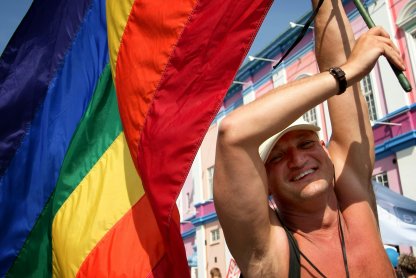
Pride Cymru, the largest Pride Event in Wales, will be turning the capital city of Cardiff pink on June 13th and 14th. ...
A comprehensive new review of scientific evidence has delivered a significant challenge to arguments used to exclude transgender women from women's sports. The research concludes that after undergoing hormone therapy, transgender women exhibit strength and fitness levels comparable to those of cisgender women.
The participation of transgender athletes, particularly trans women, in female competition is a fiercely contested issue globally. Opponents often argue that advantages gained from male puberty, such as greater bone density and muscle mass, create an inherent and lasting biological edge. This perspective has led numerous sporting bodies to introduce restrictive policies, including outright bans.
This new analysis, conducted by scientists in Brazil and reported by The Independent, offers a substantial counter-narrative. The team pooled data from around 50 studies involving nearly 6,500 individuals, including trans and cisgender men and women.
The findings revealed that while transgender women's body composition is distinct, their functional athletic performance converges with that of cisgender women after one to three years of hormone therapy. Specifically, the review found no significant difference in upper or lower body strength, or in maximal oxygen consumption (VO₂ max), a key indicator of aerobic fitness, between trans women and cis women.
Regarding body composition, trans women were found to have more body fat than cis men but levels similar to cis women, while retaining greater muscle mass. For transgender men, the study confirmed that testosterone therapy led to increased muscle and strength.
The researchers noted limitations, including that the review focused mainly on physiological outcomes in adults, leaving questions about adolescents who transition. The potential impact of "muscle memory" from pre-transition training was also highlighted as an area requiring further study.
Independent experts have welcomed the research while calling for careful interpretation. Endocrinologist Dr Ada Cheung from The University of Melbourne stated the evidence does not support blanket bans. "The findings support more nuanced policies," she said, advocating for sport-specific, evidence-based guidelines where "fairness and inclusion can coexist."

The National Secular Society says that charities should benefit the public good and cannot be abusive Christian extremists. To this end, they have reported to the Charity Commission a small church in Essex, known for its misogynistic and homophobic...
Pride Cymru, the largest Pride Event in Wales, will be turning the capital city of Cardiff pink on June 13th and 14th. ...

A social media post shared on the eve of Pride Month last Sunday featured a photograph of Vivian Jenna Wilson, taken...