Freedom Newspaper, the anarchist quarterly and one of the oldest radical papers in the UK, reports that a coalition of organisations including ACT UP, HealthGap, Médecins Sans Frontières, HIV i-base, and the Health Justice Initiative, have explained why they took over microphones for a protest at drug firms and governments' continued inaction over HIV internationally.
Demonstrators were on the scene well before the official start of this year’s international HIV conference, having assembled at 7 AM to make their voices heard. Their first target was Jeff Graham, the acting US Global AIDS Coordinator who oversees the President’s Emergency Plan for AIDS Relief (PEPFAR). The scheme was severely undermined by the Trump administration in early 2025, and campaigners were determined to confront the man now charged with its stewardship.
Asia Russell, Executive Director of Health GAP, accused Washington of inflicting devastating harm on the global response. She said the US government had deprived 77,163 children living with HIV of their medication, cut access to PrEP by 42 per cent, closed 1,700 PEPFAR treatment sites, destroyed programmes run by and for key populations, and seen implementers forced to shrink condom initiatives by 93 per cent.
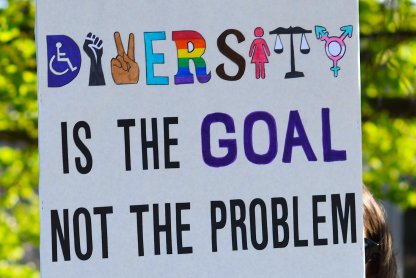
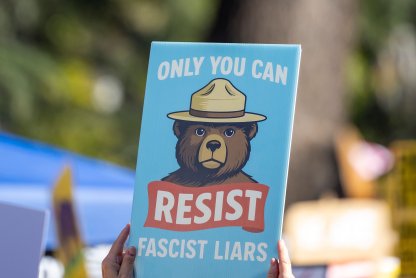
Protesters brandished placards bearing messages such as “Stop the Blackmail. Stop the Lies. Release PEPFAR Funds. Follow the Science” and “Trump’s Cuts Kill People with AIDS. Restore PEPFAR Now”. Chants of “You lie, we die” rang out across the venue, with South African campaigners adding the single, pointed word: “Murderer.”
Activist journalists later spoke with Dr Tristan Barber, Chair of the British HIV Association (BHIVA), who witnessed the demonstration first-hand. Dr Barber described the current US messaging as a form of political spin, noting that while no one wants the world’s HIV response to rely on a single nation, the abruptness of these reductions has had a catastrophic effect. He highlighted that removing explicit references to groups such as men who have sex with men and transgender people has meant funding now fails to reach many of those most in need.
Further concern was raised over Washington’s reported moves to work with faith-based organisations that, according to Dr Barber, are actively perpetuating discrimination. He reminded listeners that this narrative is being pushed by the most powerful country on Earth, which has recently spent $37 billion on a conflict that did not even have congressional backing.
Anele Yawa, of South Africa’s Treatment Action Campaign, was blunt in her assessment, insisting that the US government must be held responsible for the global public health emergency it is now generating. She argued that no amount of polished rhetoric from conference halls should distract from what the people served by PEPFAR are experiencing, demanding that Washington listen to the data and reverse course.
Winnie Byanyima, head of UNAIDS, revealed that her organisation lost around 25 per cent of its total financial support last year. She called for Africa to adapt its health systems rapidly in order to keep people alive and move towards genuine health sovereignty, adding that there was no time to waste in what she described as a moment of radical change.
Protests were also directed at the French delegation, following Paris’s decision to cut its contribution to the Global Fund to Fight AIDS, Tuberculosis and Malaria by 58 per cent for the 2026–2028 cycle. The pledge has fallen from EUR 1.6 billion to EUR 660 million. Kenyan activists warned that if donors refuse to fund HIV programmes, they may as well begin digging graves.
The wider impact of what campaigners call the “Great Unfunding” can be seen across Sub-Saharan Africa, where clinic closures have been accompanied by rising criminalisation of people living with the virus. The result, activists say, is a sharp increase in suffering and preventable deaths.
Attention also turned to the pharmaceutical industry, whose glossy advertising dominates the route from the airport to the conference centre. Companies such as Gilead, Merck and ViiV may appear to be allies in the struggle against HIV, but activists argue the reality is very different. In Latin America, they claim, a new form of colonialism is emerging, with governments like Brazil reportedly forced to pursue a “secrecy price” for treatments that ought to be universally available. One Latinx activist described the situation as a bomb waiting to explode in a few years.
The industry remains one of the most profitable on the planet, generating greater margins than even the arms trade. Unsurprisingly, campaigners say, there is little appetite among drug firms to release patents on breakthrough medicines such as Lenacapavir, a long-acting HIV prevention drug.
Despite the anger and frustration, the conference’s chosen theme of “Rethink, Rebuild, Rise” seems to have struck a chord with those attending. Further coverage is contained in the podcast "HIV: The Morning After", broadcasting a special series from Rio featuring interviews with activists, advocates and scientists on issues including global funding, stigma, inequality and intersectionality. One thing is certain: this fight is far from over.